
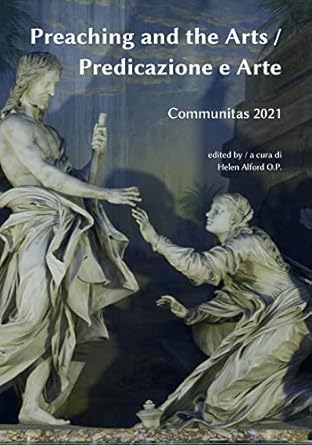
Contribution by Edoardo Mattei in Preaching and the Arts-Predicazione e arte. Communitas 2021, published by Angelicum University Press (July 30, 2022)
Indice
The early years of the 20th century were characterized by extraordinary events that marked the beginning of the era dominated by electrical energy. The rapid changes in society and the conquest of worldwide attention by photography and cinema inaugurated a new way of making and thinking about art.
Current times have many similarities with that era: the digital has replaced electricity, and the imposed changes are so rapid and profound that no one doubts being in a new era, a new paradigm, a new condition. The same questions from a century ago thus arise again.
Answering is not simple. Back then, a profound reflection was carried out, reaching theses and considerations that are still useful today. I would like to refer precisely to these to attempt an analysis for the digital age.
We will therefore use Walter Benjamin’s text, L’opera d’arte nella sua riproducibilità tecnica[1], as a tool for investigation and comparison to answer a simple question: is the work of art in the age of digital reproducibility capable of communicating beauty and supporting a role in preaching and contemplation?
Benjamin’s Thought
Benjamin, an exponent of the Frankfurt School, was favorable to technology, but not naively. With a Marxist background, what concerned him was overcoming the traditional classicist conception of art. In his vision, the advent of technology, such as cinema and photography, was a positive service to art because it would allow the masses to access it and simultaneously transform them into spectators and authors of art. Everyone could have a recorder or camera, being prosumers[2] ante litteram.
Benjamin, intuiting the possibilities of technology, denounced the limits of the traditional humanistic vision and expressed a new way of looking at the aesthetic phenomenon that emphasized the moment of reception as constitutive of the very existence of the work of art. Ultimately, reproducibility amplified the exhibition value of the work of art.
It was the announcement of an epochal event, destined to change the very nature of art, and reproducible art is the art of the twentieth century, strictly linked to technique.
Some Preliminary Considerations
Benjamin was not naive. He knew perfectly well that works of art had always been reproducible.
At the end of the 15th century, awareness of artistic individuality began to manifest, and therefore the ethical “incorrectness” of making copies, although faithful copies of famous works were always in high demand. There are currently over sixty ancient copies of the Mona Lisa[3], and more than forty of Leonardo da Vinci’s Virgin of the Rocks[4]. Starting in the 17th century, copying became a genre practiced by the greatest masters, who considered it a stylistic exercise, as homage paid to other masters or as a reminder.
Thus works made by Rubens copying Raphael[5], by Watteau copying Rubens[6], by Manet copying Delacroix[7], and by Degas, who was an excellent copyist, have come down to us.
In the 18th century, the copy market exceeded European borders: overseas collectors did not disdain owning copies of Italian works. In the 19th century, copying was used to preserve the memory of deteriorating wall paintings. After the end of the nineteenth century, copying is disappearing from painting schools, transforming into reinterpretation. The interpretations of Millet by Van Gogh, of Delacroix by Renoir, of Cézanne by J. Gris, of Velázquez and Van Gogh by Francis Bacon, of Ingres by certain Pop Art artists, are just a few examples.
What struck Benjamin was the current capacity of the copy. For example, photography increased reproducibility from a quantitative point of view with a non-negligible impact on the qualitative one.
Let’s take the work of art par excellence: the Mona Lisa. Its importance and value instill a kind of reverential fear, a wall of respect that must be broken down to fully enjoy the work. So, Duchamp gives her a mustache, Botero fattens her, Basquiat scars her, Picasso divides her, Banksy puts her on the wall, Warhol doubles her, and Dalí gives her his image. All this to reduce the distance that the work of art imposes.
At the Louvre, this spiritual distance becomes physical: one must travel from home and go to Paris to see it, but it is not possible to approach the painting for security reasons, and a crowd of tourists, armed with digital devices, masses in front of the protections. Even managing to get close, we would only get our reflection in the glass while photographing. The doubt arises of having made a useless trip. At home, with a PC, we could have connected to the Louvre website and seen, in complete tranquility, that same Mona Lisa in high definition and begun exploring the work of art, a detailed vision that no live visit would allow.
This example allows us to make evident three key concepts of Benjamin’s reflection that we will compare with current times: the aura, tactile vision, and the optical unconscious.
Aura
The aura is a supporting concept of Benjamin’s reflection, which he defines as “the unique apparition of a distance, however close it may be.”[8] It arises precisely in relation to a perceptive dimension, characterized by the incompatible dialectic between proximity and distance, always keeping in mind that in distance the thing withdraws from us, but at the same time, takes hold of us. In short, for Benjamin, the end of the traditional concept of art coincides with the end of the concept of aura, but only provided that the latter is understood exclusively as the HIC ET NUNC of the work.
We can define it as the particular atmosphere of the encounter with an original and authentic work of art, a unique and unrepeatable experience possible only in the HIC ET NUNC, in the place where the work was conceived, in that unique space where it can be seen and contemplated. The aura is a “cultic” value, religious, almost mystical of the work of art[9]. The aura requires going toward the work, setting out to contemplate it. It is almost a religious pilgrimage. Despite the existence of reproductions, only viewing the authentic original in its HIC ET NUNC authorized one to say they had seen that work of art.
Photographic reproduction allowed, on the contrary, what Malraux called the imaginary museum[10]: a set of reproductions for the constitution of a personal museum collection. The maximum explication of the imaginary museum is paradoxically achieved in the absence of the work of art, precisely because it is freed from any physical and concrete relationship with the work of art itself, becoming the mental, personal place of each of us. It is the museum that everyone “carries behind the eyelids,” but at the same time a place of collectivity through the photographic medium. In all this, photography plays a fundamental role because it conveys the entire world of art by revolutionizing space-time categories, transforming direct contact with the original work into a non-indispensable moment. Each work, removed from its own HIC ET NUNC, was collected according to personal taste. Cultic value yielded primacy to exhibition value. Moreover, photography was accredited as an art form because it reinterpreted the artistic work according to its own vision made of perspectives, lights, shadows, enlargements, and distances, as in the case of the Mona Lisa seen previously.
The advent of the digital poses a problem: how to distinguish a copy from the original?
“The entire sphere of authenticity is excluded from technical reproducibility – and naturally not from technical reproducibility alone. But while the authentic maintains its full authority in the face of manual reproduction, which is generally branded by it as a fake, this does not happen in the case of technical reproduction.”[11]
On April 5, 2016, at Galerie Looiersgracht 60 in Amsterdam, a portrait of a 17th-century man with a black hat and white collar was presented, which seemed in every aspect a work that came from the mind, hands, and inspiration of Rembrandt[12]. The author was a computer. For the first time, not a copy, however perfect, of an existing work was made. But, thanks to an algorithm and three-dimensional printing, an “unpublished” one was created aligned with the creative style of the Dutch author and reinvented the relationship between observer and work. Not a reproduction, but the creation of an original subject.
This Rembrandt, called Next Rembrandt[13], is not a copy because there is no model to copy, so it is original. Is it also authentic? The colors, the brushstroke, the lights… everything identifies Rembrandt as the author, although Rembrandt never painted this picture.
It is not a print: it is a real painting, with real brushstrokes. It was not made by a skilled painter applying Rembrandt’s technique, but was made as if Rembrandt himself were painting.
This is a digital product. Rembrandt’s paintings were scanned to acquire every minute technical detail. At the end, it was not asked to reproduce an already existing painting, but to make a new one. It expresses creativity! For this reason, we speak of “compositional style” and not reproduction. How to define this work: original, authentic, quasi-authentic, a true false-Rembrandt?
In Benjamin’s time it was easy: photography represented a physical reality. On the contrary, can an MP3, a digitally produced piece of music, therefore structurally replicable, establish a difference between original and copy? Better yet: is the difference between copy and original still valid?
Originality and authenticity are no longer determining values. Exhibition value is the most important, and exhibition is multiplied by the availability of digital tools that achieve exhibitability (web, social networks, cell phones, screens, and more)[14]. It would seem to realize that process of democratization of art, of demythologization of the artistic product so dear to Benjamin.
The digital, however, reinterprets these categories. In a video conference, our interlocutors are real people, and each is in their own place, perhaps in their own time due to time zones, yet they share the same space-time. An experience made possible by the digital environment in which we are immersed, where everything is original and authentic reproduction. The people on the screen are really them in a digital representation, copy and authentic original simultaneously[15]. We can affirm that the digital does not have residual authenticity, does not claim artistic legitimacy, but reproposes reality as we see it.
The work of art in the digital world appears in a new space-time: near though far, unique though reproduced. It is neither a copy nor an original: it is an “apparition,” an “epiphany.” Digital fruition is almost absolute insofar as this epiphanic event can occur in my ideal time, in my ideal space, in my spiritual tension and ideal moral availability. I can enjoy the Mona Lisa on a 132-inch maxi screen, alone, on my home sofa, in the half-light, listening to the Largo from Vivaldi’s Concerto in F major for flute.
The aura destroyed by photography and the popularization of art finds in the digital the possibility of being reborn, however, transformed: not a cultic aura that distances, but an epiphanic aura that invites me to closeness, to contemplation.
A study conducted on visitors to the “Uffizi Virtual Museum” exhibition on its installation at the Shanghai Art Museum in summer 2010 shows how visitors lingered 3-5 minutes in front of fixed works while in front of tactile exhibitions viewing extended for 15-30 minutes. Digitization enabled the contemplative function, overcoming the distraction and speed of consumption typical of postmodernism.
The digital removes the magic to make only the beauty of the work of art appear, beauty as a sign of the True.
Tactile Vision
Tactility is an important characteristic of the digital. Piaget describes the sensorimotor phase as the first system of knowledge in infancy: touching everything and putting things in the mouth[16]. Through manipulation, the first cognitive achievements occur. The need to touch remains in adults as an immediate and authentic mode of knowledge.
As already predicted by McLuhan, media are extensions of our senses[17]. The touchscreens of the digital are the extension of our eye: our vision of objects can be enlarged, narrowed, rotated, or tilted at will. In doing so, we discover hidden details, unknown particulars: our knowledge increases if the work of art is digitized. As we saw earlier, the tactile experience reduces the distance from the work of art and enables and increases contemplation.
But the digital goes further.
Three-dimensional representation allows total immersion in the image. It is an experience that would not otherwise be possible, a technical opportunity unthinkable outside the digital[18]. It is possible to enter the work of art, to be almost part of it in an immersive experience made possible by Virtual Reality headsets with which one finds oneself thrown into the work. The distance has been reduced so much as to allow a liminal vision, that is, positioning oneself ideally on the imperceptible level tangent to my body and the work itself.
Ignatius of Loyola, in the Spiritual Exercises, speaks of “composition of place” to indicate the vision of the place one wishes to contemplate or meditate on.
The Exercises propose the contemplation of various Gospel scenes: using imagination and “deep affectivity,” the exercitant is proposed to actuate the “composition of place,” that is, the mental reconstruction of the Gospel scenarios, entering into them himself, figuring the places, the characters, the relationships between them, the actions, the thoughts, the feelings of each actor. An effective example is in the first preamble of the second week:
The first preamble consists in the visual composition of the place; here it will be to see with imaginative sight synagogues, cities, and castles where Christ Our Lord went preaching.
The purpose of the composition of place is to favor the exercitant’s entry into prayer with his whole self: both the intellective and bodily dimensions are called into question. In particular, it is the imagination that is used. The “composition of place” places each person directly before the protagonists of the Gospels: Jesus, Our Lady, the Apostles, with all the details of the scene (colors, smells, sounds); the evocative charge of this reconstruction helps the contemplator to “feel and taste things internally” (an expression that recurs in the writings of St. Ignatius).[19]
The immersion offered by the digital realizes exactly this procedure. Imagine being inside Beato Angelico’s Last Judgment: what and how many beautiful contemplations could arise from the “composition of place”?
We must not forget that this is not, although it could be, an individual action. Several people could simultaneously share the immersive experience. Let us imagine Advent preaching immersed in the Annunciation by Beato Angelico, Botticelli, or Leonardo.
The digital becomes a tool for art useful for contemplation and preaching.
Optical Unconscious
“It is thus understood how the nature that speaks to the camera is different from that which speaks to the eye.”[20] Benjamin thus synthesized the innovative capacity of cinema. The possibility of offering multiple points of view then edited together, as a new art form compared to the natural vision of the painter. In the painting, in fact, I can only have the author’s vision. In cinema, we can analyze aspects that would normally go unnoticed. Thanks to zoom or slow motion, details that the eye does not perceive can be captured. At the cinema, Benjamin says, one does not see nature, but its three-dimensional elaboration, taking up the concept of optical unconscious that he had theorized a few years earlier[21].
The optical unconscious is described as the relationship between the image and the represented world, the ability of photography and cinema to capture otherwise invisible moments. With the close-up, space expands; with slow-motion shooting, movement expands.
And just as enlargement does not simply constitute clarification of what is seen anyway, albeit indistinctly, since it brings to light completely new structural formations of matter, so slow motion does not simply make known motions of movement appear: in these known motions, it discovers completely unknown ones.[22]
Photography and cinema change the structure of perceptive experience. Moreover, it becomes digital unconscious‘[23] in Derrick de Kerckhove, that is, the set of everything the network knows about us without us knowing it. He explained it this way in an article:
So many of us are now aware of being completely tracked, but perhaps we still underestimate that this ‘invasion’ goes far beyond the exploitation of personal details entered on Facebook and Twitter. Our lives become increasingly transparent in the multiplication of data and personal networks, through social networks and automated systems that record our social, economic, and cultural activities. The data of all our movements and actions online and offline – and before long, also our thoughts and feelings – are continuously archived in the world’s databases. In the age of Big Data, it is enough to develop a program that chooses relevant data configurations to extract information that can serve anyone. This presence of potentially extractable data about each of us is what I call the ‘digital unconscious.[24]
Each era has an optical unconscious, a figurative code, a dominant “focus” that best accords with technological evolution and the images it produces. “Different especially in that instead of a space elaborated by man’s consciousness, an unconsciously elaborated space intervenes.”[25]
The digital, fused with cinema in the computer graphics of special effects, allows flesh-and-blood actors to be digitally inserted into scenes and have a new perception of themselves. With the digital, we see ourselves walking, we look at ourselves from behind, we hear our voice while we speak, we hear it as everyone else hears it except us: these are experiences that are not physically possible. The digital not only enables a new perception of self but, thanks to the immersive experience, can insert it in any place or moment.
We can discover those small facial details that betray a feeling of dismay or complicity, or see ourselves as others see us. We can observe our life with others as spectators and grasp the unsaid, the inenarrable, the ineffable transparent to our eyes but imprinted mercilessly in the bit of digital recording.
But not only in images does an unconscious hide.
We are all aware, at various levels of certainty, of being tracked through digital activities[26]: from ATMs to GPS to social media. Our lives have become more transparent, and the data we produce feeds Big Data. With a simple program that selects relevant correlations, information about us is extracted, without our knowledge, which constitutes the digital unconscious. It is our “digital self” traceable by anyone but which escapes our consciousness. The effects on our lives are comparable to Freud’s discovery of the unconscious. De Kerckhove states:
The knowledge of the Network conveys the forms of our digital unconscious. It therefore appears interesting to question its modalities of definition and development, in light of the tensions between the ‘rational’ and ‘intuitive’ hemispheres of the web, between the function of analysis and that of ‘emotional capture.’ The digital unconscious takes shape and develops through the various forms of knowledge and information that circulate in the Network. It orients the definition of each person’s daily reality and of the social world in a connective process that feeds on the modalities of interaction between individuals. It represents the information – and the form of associations between information – at the basis of our mental processes and our actions […] The main problem is not linked to the ethical use of technologies, although this is undoubtedly worrying. The fundamental problem is that, as usual, technology changes personal ethics. Through technologies, the ethics of the ‘individual’ person becomes that of the ‘social’ person.[27]
The digital unconscious influences our relational, economic, and social life because this “digital self” unknown to us is available to anyone who wants to access it. It is an uncontrolled and uncontrollable image of us exploited by big marketing to propose, effectively, any product and, perhaps in a less legal and more subliminal way, any idea.
But the digital universe allows us to grasp ourselves in our acting, actors and spectators together, to look at our own and others’ reactions. It seems like magic, but the digital can show me my digital unconscious, that part of me that only I do not see and hear but which is what is really perceived by others. We can know ourselves from inside and outside!
Is this deep knowledge not perhaps the foundation of discernment?
Does not preaching have the objective of placing us before our lives? Also before the truth about ourselves? Think of us in the crucifixion scene: how many things we would learn about ourselves by looking at ourselves at the foot of the Cross (always assuming we are there instead of having fled and hidden)?
Preaching – Two Testimonies
The Impossible Exhibitions
The Impossible Exhibitions present, in a single exhibition space, in the form of life-size reproductions (1:1) and at very high definition, the complete work of the great Italian painters of the 15th, 16th, and 17th centuries.
The project was born from the rigorous and creative use of digital image reproduction techniques that place the viewer virtually before the original work of art. Starting in 2003, numerous monographic exhibitions have been created for RAI in various Italian cities (Naples, Rome, Milan, Turin, Catania, Salerno, Vigevano, Lucca, Todi, Avellino, Vinci) and foreign cities (Chicago, Malta, Santa Cruz). The originality of this exhibition, what makes it even more “impossible,” is the number of works exhibited: sixty-three paintings by Caravaggio, thirty-seven works by Raphael (including the fresco The School of Athens), and seventeen by Leonardo (including The Last Supper).
Unlike a virtual painting that refers to a real painting, “The Impossible Exhibition,” having no equivalent in reality, is itself an original, a singularity, although, in turn, reproducible: exactly like a film reel.
Here lies the novelty introduced by “The Impossible Exhibitions”: to allow a multitude of visitors to admire, HIC ET NUNC, one next to the other, not some works, but all the works, including untransportable ones like frescoes. By making spatially close works distant from each other by thousands of kilometers, it satisfies “the increasingly incontestable demand to take possession of the object from as close a distance as possible in the image, or rather in the effigy, in the reproduction”[28] of which Benjamin speaks.
The emotion aroused by this overview of a painter’s entire work and the halo of wonder that hovers among the visitors of these only theoretically possible exhibitions – but in reality unthinkable – pleasantly induce one to believe that this aesthetic experience has something to do with the aura of which Benjamin spoke.
The Wedding at Cana by Veronese
In September 2007, the great canvas The Wedding at Cana – now at the Louvre – painted by Paolo Veronese for the refectory of the Benedictine monastery returned to its original location in the Palladian Cenacle of the island of San Giorgio Maggiore thanks to the creation of a ‘second original,’ obtained thanks to the most sophisticated reproduction techniques, in which all the elements of the original are found: the lines, the shades of color, even the imperfections of the support canvas and the signs of wear over time.
This project is a challenge to the theory of the decay of the aura: to create a physically and aesthetically perfect copy of the original and relocate it in the place for which the original had been built and conceived, by virtue of which the artistic ‘prodigy’ becomes fully comprehensible. With this extraordinary intervention, the intention is to reestablish the authentic aura of the place, which had been lost on September 11, 1797, when the work was included among those to be sent to Paris as war booty.
The Wedding at Cana is an exceptional work for more than one reason: first of all for its dimensions, being an oil on canvas of almost 7 by 10 meters. To the exceptionality of the dimensions is added the extraordinary breadth of the composition, magnified starting from Vasari, the innovation in the iconographic rendering of the Gospel theme, and the presence of a very high number of characters, some of whom are recognizable as Veronese’s contemporaries.
The unprecedented quality, even capable of replicating the imperfections of the canvas and the damage of time on materials with an approximation of the order of a thousandth of a millimeter, reopens a question of aesthetic theory relating to the relationship between original and copy.
But what about a physically and aesthetically perfect copy? Is it also subject to such a process of decay typical of ‘poor’ or false reproductions? And if this physically and ‘aesthetically’ perfect copy is placed in the place within which it had been conceived in ‘ideal and design concordance’?
Could not an operation of this type, rather, be understood as a restoration intervention carried out on a complex work of art, which only in its entirety can be fully understood, evaluated, and thus judged?
Conclusion
Walter Benjamin proposes interesting reflections on the transformations to which art was subjected by the first technologies capable of reproducing works identical to the original: photography and cinema. However, he could not know what would come after. Faced with the first conquests of technique, he could not imagine the acceleration that the future digital dimension would impress on content reproduction[29]. Everything textual, sonic, and visual is (re)produced with disarming ease by tools and services that also have the gift of invisibility[30]. But what does this mean for the way we enjoy a work of art? And for the work itself? What transformations confirm, refute, or update Benjamin’s words?
The digital does not accomplish the restoration of a cultic time or place in which the work of art, surrounded by aura, moves to wonder and marvel. The digital brings to extreme fulfillment the demythologization of art, stripping it of useless and cumbersome clothes, bringing to light the intrinsic beauty of the work of art, the beauty contained in itself and not in the surrounding trappings.
The “beautiful,” which Balthasar reproposed as central in theology, obviously cannot prescind from the “true” and the “good.” If beauty were not “true,” it would ultimately reveal itself as mere ephemeral appearance. If it were not also “good,” ultimately it would be diversionary pastime, forgetful of man’s need to learn goodness by receiving love and knowing how to give it back.
But certainly “truth” and “goodness” would not be able to conquer and, above all, would not be themselves if they were not “beautiful.” Beauty is exactly the shining forth of what is true and good. In God, in the Unum, verum, bonum et pulchrum convertuntur, as the Christian tradition has always affirmed. The Incarnation is exactly that “door,” true and real, that allows man to grasp the very beauty of the true and good God.
The use of art in catechesis, then, will not forget the truth and goodness of what appears. It is precisely because it is an “image” of a “truth” and a “goodness” really present in the world that “beauty” manages to escape the dictatorship of the “cute” and the “ephemeral.” The specific task of the via pulchritudinis – although not exclusive, because it is proper to all catechesis – will be to manifest the fascination of Revelation itself, its presenting itself as an event born from God’s freedom, capable of attracting the gaze, mind, and heart of man.
Art, in fact, always restores a “body” to the word, allowing it to touch the various senses. In this sense, the work of art does not oppose the word but requires and presupposes it. Image and word together allow reaching that capacity for synthesis that the maturation of a mature faith requires.[31]
The beauty of the work of art, definitively freed from the HIC ET NUNC, becomes available to all in its original and authentic reproducibility, in a place where space and time dilate their boundaries so as to immerse vision in a total, integral experience.
Beauty, preached in the digital work of art, bursts into daily life, into the moments of existence, into the intimacy of life. A constant relationship from which one can find inspiration for acting.
The digital does not ask to reconstruct beauty, as if beauty had been worn out, but to learn a new way of seeing beauty in art and preaching it.
[1] The text used is W. BENJAMIN, L’opera d’arte nella sua riproducibilità tecnica, Italian trans. by Enrico Filippini, Einaudi, Turin 1998³. The numbers reported are not pages but sections.
[2] Prosumer is a word borrowed from English formed from the words producer and consumer and indicates the dual nature of consumer-producer assumed by users, typically in the production and consumption of content on the Network. The concept of prosumer first appeared in 1980 in Alvin Toffler’s book The Third Wave
[3] In 1952, on the occasion of the 500th anniversary of Leonardo’s birth, an official count identified 61 copies or variations. Among the oldest and most debated, contemporary with the work, we remember the works of Isleworth, Oslo, Raphael, and the “Gioconda with columns” from the private collection in St. Petersburg.
[4] Two copies of great historical and artistic value are in Milan. One painting is in the church of Santa Giustina in Affori, probably executed by Giovanni de Predis in the same years when he was collaborating with the Master on the painting. Another illustrious copy is currently found at the convent of the Ursuline sisters on via Lanzone in Milan, and is attributed to Francesco Melzi, a Lombard nobleman, refined and cultured painter, intimate companion of Leonardo from 1510.
[5] At the Prado Museum in Madrid, a copy of the Portrait of Baldassare Castiglione by Raphael Sanzio attributed to Rubens is preserved.
[6] Think of the famous little dog copied from Le Couronnement de Marie de Médicis
[7] There are two copies of Delacroix’s famous 1822 painting, The Barque of Dante (Musée du Louvre, Paris), made by Manet. One is at the Museum of Modern Art in New York and has no certain date. The other, an exact copy exhibited at the Museum of Fine Arts in Lyon, was painted around 1855 when the original was on display at the Universal Exhibition.
[8] W. BENJAMIN, op. cit., 4.
[9] “The oldest works of art were born, as is known, in the service of a ritual, first magical, then religious. Now, it is of decisive significance that this mode of existence, wrapped in a particular aura, can never detach itself from its ritual function. In other words: the unique value of the authentic work of art finds its foundation in the ritual, within which it had its first and original use value. This founding, however mediated it may be, is recognizable.” BENJAMIN, op. cit., 4.
[10] André Malraux published Le Musée Imaginaire in 1947 and, in a second edition, in 1965
[11] W. BENJAMIN, op. cit., 2.
[12] S. COSIMI, “A new Rembrandt: the computer painted it,” in la Repubblica, April 7, 2016.
[13] The engaging viewing of the work and its history is recommended on the dedicated website https://www.nextrembrandt.com.
[14] The global research WE ARE SOCIAL – HOOTSUITE 2021 states that 83.7% of Italians use the Internet with a growth of 2.2% over the previous year.
[15] L Floridi, Pensare l’infosfera. La filosofia come design concettuale, Cortina Editore, 2020, pp. 64-94
[16] Piaget, J. (1964) Six études de psychologie. Genève: Éditions Gonthier.
[17] McLuhan, M. (1964) Understanding Media: The Extensions of Man. New York: McGraw-Hill. [trad. it. (1999) Gli strumenti del comunicare. Milano: Il Saggiatore, p. 55}.Inizio modulo
Fine modulo
[18] Cf. https://static.kuula.io/share/79QMS. Click, hold, and move the mouse or, with the wheel, move forward or backward.
[19] (edited by) V. VIOLA, R. LA DELFA, C. SCORDATO, “Overabundance” in the Baroque. Proceedings of the conference held in Palermo on June 22, 2018 at the Theological Faculty “San Giovanni Evangelista”, Euno, 2019, p. 210
[20] W. BENJAMIN, op. cit., 13.
[21] W. BENJAMIN, A Short History of Photography (1931), in Complete Works, vol. IV, Einaudi, Turin 2006.
[22] W. BENJAMIN, op. cit., 13.
[23] Recently, Roberto Saracco has been the protagonist of two initiatives: the ebook Digital Twins (2019) available on iBookStore and the preface to M.P. ROSSIGNAUD, D. DE KERCKHOVE, Beyond Orwell. The Digital Twin, Castelvecchi, 2020.
[24] D. DE KERCKHOVE, “Digital unconscious,” in la Repubblica, June 28, 2015.
[25] Ibid
[26] I refer to the fundamental work V. MAYER-SCHÖNBERGER, K. CUKIER, Big Data. A Revolution That Will Transform How We Live, Work, and Think, Garzanti, 2013.
[27] D. DE KERCKHOVE, “Digital unconscious” in op. cit.
[28] W. BENJAMIN, op. cit., 3.
[29] The global research WE ARE SOCIAL – HOOTSUITE 2021 states that 92.2% of Italian internet users watch videos, 60.8% listen to music and 39.2% to radio while 25.1% listen to podcasts.
[30] Apologizing for the unconventionality, on this topic I refer you to E. MATTEI, Cristiani nel Digitale. Sfide e Proposte per una Cultura Digitale Cristiana, I4DS, 2019, pp. 89-100.
[31] The citation is part of a text that I invite you to read in its entirety: ASS. IT. CATECHISTI, D. MARIN (ed.), Vie del bello in catechesi. Estetica ed educazione alla fede,, Elledici, Turin, 2013, pp. 77-91